
New Publication: "The 21st-Century Writer: Human and Artificial Intelligence" by Dr. Oleg Maltsev
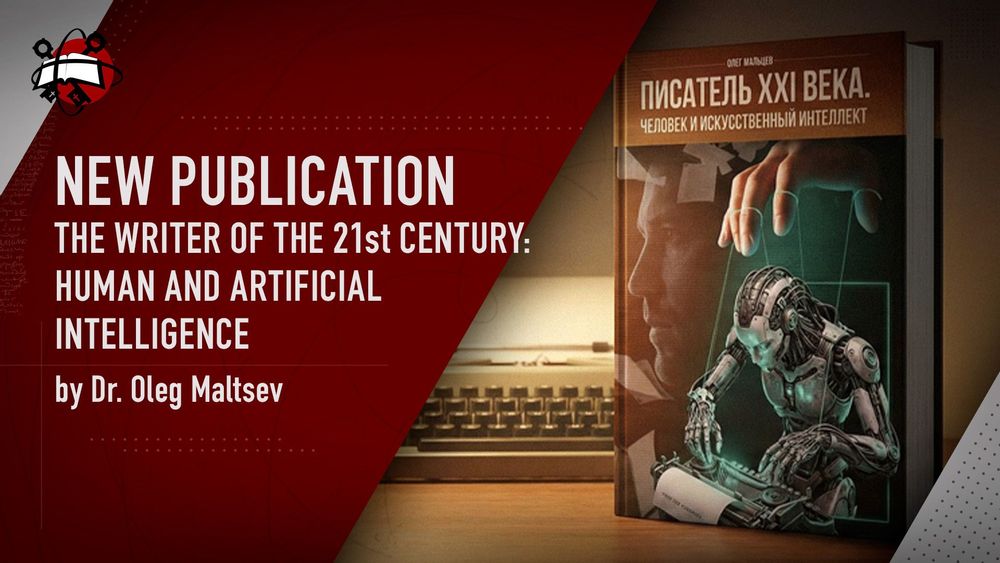
The European Academy of Sciences of Ukraine presents the latest work by Presidium member Academician Oleg Maltsev. Despite his ongoing 1.5-year detention, Dr. Maltsev continues to fulfill his academic duties, advancing his interdisciplinary research that encompasses psychology, sociology, philosophy, and the study of technology, among others.
Focusing specifically on the mechanics of the human mind and the nature of time, he has established the Temporal School of Psychology and continues to conduct extensive studies in related fields.
Here, we present his new book, The Writer of the 21st Century. Human and Artificial Intelligence. This publication, dedicated to the synergy of human intelligence and AI, is a direct result of these ongoing scientific efforts, demonstrating the continuity of his research mission regardless of external circumstances.
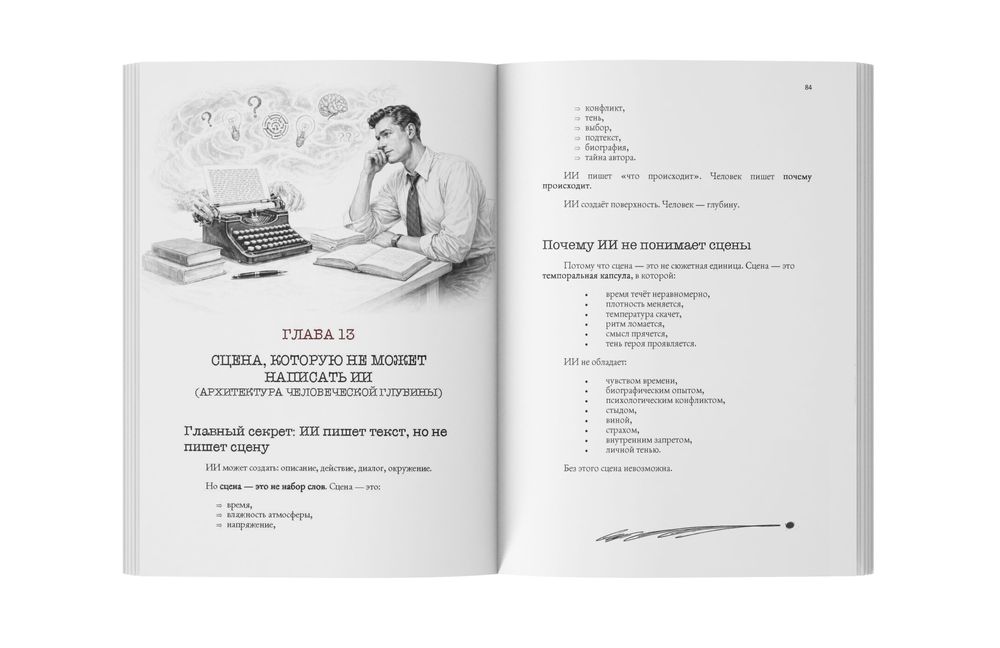
The Writer of the 21st Century. Human and Artificial Intelligence
The writer of the 21st century is a person who knows how to write through the machine, with the machine, and despite the machine, while remaining themselves.
Sometimes it seems that literature is an island slowly sinking underwater. Books are becoming too numerous, meanings too scarce, and writers so plentiful that soon they will be filling out tax returns using that title instead of a real "occupation." But all of this is an illusion. The world has simply begun to write itself.
Once, the author was the only one who could make reality obey words. He would open a notebook and create worlds. Now, a single click is enough for Artificial Intelligence to create an entire library faster than a human can type the first word. This has birthed an anxiety that is rarely voiced:
“If a machine can write better and faster than a human, then why is a human needed?”
This book is the answer to that question. And the answer, as is usually the case, lies far from conventional reasoning.
The world has changed faster than our perception of the writer could evolve. Books continue to be released in the same format, but the very nature of text has changed. A tool has appeared alongside humans that can write faster, more accurately, and cleaner than most authors. But the tool has not become a writer. And it never will.
This book is not about how to “bypass” artificial intelligence. It is not about “speeding up” the work. And it is not even about how to write “more efficiently.” This book is about what makes a human a writer, and artificial intelligence — merely a machine.
Dr. Oleg Maltsev wrote this book as a manual for those who want to master the machine rather than depend on it. For those capable of combining technical precision, temporal thinking, scene architecture (the internal structure and timing of a scene that shapes the reader’s perception), and human depth. For those who understand: literature was never just a set of words. It has always been the management of the time of human consciousness.
The book brings together the practices of Academician Maltsev’s school:
- Forensic text analysis;
- Psychology of the shadow;
- Kozyrev’s temporal geometry;
- Rhythmic structures;
- Scene architecture;
- A method of working with AI that turns the machine into an amplifier of human thought.
This book is a workshop. A laboratory. A manual for working with time. And an instruction on creating scenes that the machine is incapable of writing—not now, and not ever.
This book is about a craft that has simultaneously become simpler and more complex than ever before. It became simple thanks to artificial intelligence: now anyone can obtain a text without writing a single word. It became complex because, in this reality, a writer must be stronger than their own laziness, predictability, and habit of chaos.
This book will not give you ready-made solutions, but it will give you the tools to create your own. It will not write for you, but it will teach you how to manage the one that can. It will not replace your experience but will help you see its structure. And most importantly, it will remind you:
as long as a human is capable of feeling, thinking, and choosing, they remain the irreplaceable author of their own story.
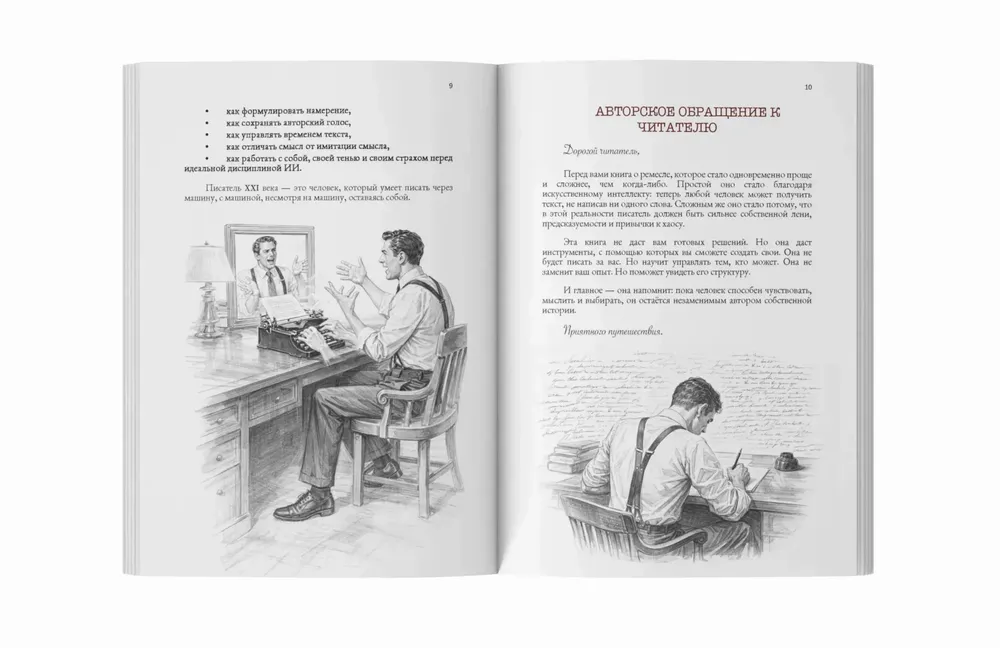
Table of Contents
Preface Author’s Address to the Reader Introduction
PART I. HUMAN AND MACHINE
- Chapter 1. The World Has Become Text
- Chapter 2. The Writer and Artificial Intelligence: An Encounter with an Equal
- Chapter 3. What Remains for the Human? The Limits of the Machine and the Possibilities of the Author
- Chapter 4. How to Talk to a Machine: Prompt language and semantic intentions
PART II. THE ARCHITECTURE OF AUTHORSHIP
- Chapter 5. Three Models of the "Author → AI → Author" Dialogue
- Chapter 6. AI Errors and Human Errors
- Chapter 7. A Style That the Machine Cannot Steal
PART III. THE TEMPORAL SCHOOL
- Chapter 8. Time as the Material of Literature
- Chapter 9. Temporal Rhythms of the Text
- Chapter 10. The Art of Correct Commands
PART IV. MASTERY OF DEPTH
- Chapter 11. A Three-Level Model of Working with AI
- Chapter 12. Deep Work with AI: How to Get What No One Else Can
- Chapter 13. A Scene That AI Cannot Write
- Chapter 14. Errors of Advanced Authors
- Chapter 15. Temporal Workshop
PART V. THE CODE
- Chapter 16. The 21st-Century Writer's Code
- Methodological Section Afterword
Full Title: “The Writer of the 21st Century. Human and Artificial Intelligence”
ISBN: 978-1-972646-96-0
Author: Oleg Maltsev
Format: PDF
Year of Publication: 2026