

The Liquidation of Intellect: Chronicles of the New Odessa Lawlessness
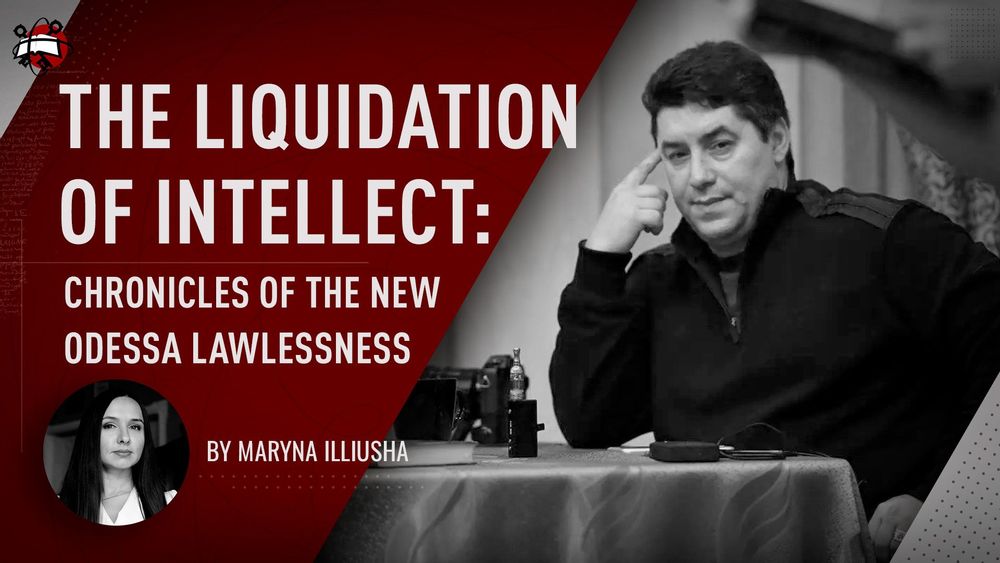
The Liquidation of Intellect: Chronicles of the New Odessa Lawlessness
by Maryna Illiusha
Odesa has always played by its own rules. This was a city where people knew how to do business, how to negotiate, and—if we’re being honest—how to “solve problems” with a certain flair. But what’s unfolding there now, in the fall and winter of 2024–2025, brings to mind Bandit Petersburg, a TV series showing crime and lawlessness in the 1990s and early 2000s. The difference is that instead of leather-jacketed gangsters, the job is now being done by people in uniform, and instead of soldering irons they use Criminal Code articles on high treason.
At the heart of this turmoil is a man who defies easy labels: Oleg Viktorovich Maltsev. A scientist, a mystic, twice a PhD, professor at European universities. In Odesa, he created his own “mini-state,” complete with research, archives, and his own security. The system doesn’t forgive people like that. It prefers those who are easy to control. Maltsev was independent, unpredictable, and, worst of all for today’s world, he refused to stay quiet.
“Mask Raid” for the Professor
In September 2024, the footage blew up across all Ukrainian Telegram channels: masked special forces, people pinned to the floor, and sensational headlines claiming the “gang was neutralized” and “GRU agents captured.” The story fed to the public was simple: “They caught cult members plotting a takeover.” But let’s cut through the hype and look at the facts with a clear, investigative lens.
Who got arrested? A hardened criminal? No. They arrested a world-famous scientist Oleg Maltsev, a partner of top Western anti-mafia experts like Antonio Nicaso and Nicola Gratteri. Think about that: Odesa law enforcement detained a colleague of the man who, in Italy, jailed hundreds of mobsters and now lives under Carabinieri protection. Either this was sheer cosmic stupidity or brazen audacity bordering on madness.
What is he accused of? Running an illegal armed group. Investigators show off weapon models and sporting rifles. What they don’t mention: the so-called “gang leader” is a man who painstakingly reconstructed ancient Spanish fencing. That’s like arresting a Borodino battle reenactor for plotting an invasion of France.
An American time bomb
But in criminal work, the rule is simple: look for the motive. Why was Maltsev targeted now, and so ruthlessly, with judges and lawyers forced to comply? The answer isn’t in Odesa—it’s across the Atlantic.
Eight weeks before his arrest, Maltsev’s book is released in the United States under what now seems like a prophetic title: Strike in the Deadliest Manner Possible. It is co-authored with Dr. Prof. Harvey W. Kushner, one of the USA’s top terrorism experts, and features a foreword by New York professor Jerome Krase.
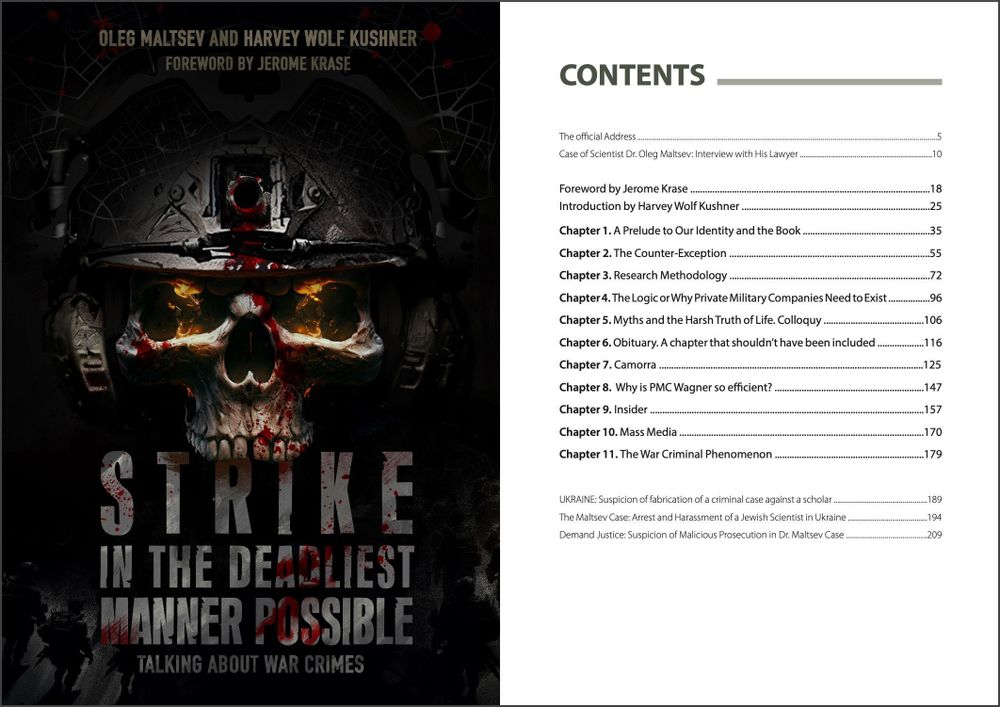
This isn’t just a book. It’s a serious analytical breakdown of modern warfare, war crimes, and the Wagner private military group. Maltsev allowed himself an unheard-of audacity: he began telling the truth about war to a Western audience. No slogans, no propaganda—just cold, academic analysis. He described how states are losing their monopoly on violence, and how the machinery of killing actually functions.
One chapter in particular reportedly made people in high offices sweat. Maltsev included an interview with his own lawyer right inside the book, openly warning the world: “I will be persecuted.” He knew what was coming—and he got the book out in time.
That’s when the system snapped. When someone they thought was a controllable local figure in Odesa started speaking directly to America, bypassing Bankova’s political censorship in Kyiv, the verdict was sealed. The decision was simple: silence him.
“The Blocker Is On”: Silencing the Witnesses
What follows is what lawyers call “procedural lawlessness.” In the language of the ’90s, it’s called “pressure.”
Defense lawyer Olga Panchenko was jailed. In any civilized legal system, that’s a red line—you don’t target defense counsel. But in Odesa, different rules apply. Female staff members from the research institute were held in degrading, inhumane conditions, pressured into giving testimony.
Maltsev, a seriously ill man, is being kept in pretrial detention under conditions that amount to slow destruction. The European Court of Human Rights has previously recognized these facilities as effectively torturous, but that hardly seems to matter. The goal is straightforward: either he breaks and signs whatever confession they hand him, or he never walks out. Their logic is simple: No man, no problem. And the assets, the intellectual property, the archives of the scientist—those can all be neatly appropriated. A corporate-style raid disguised as patriotism is a well-worn playbook.

The World Is Shocked. Odesa Falls Silent
The most remarkable part of this story is the West’s response. While local outlets like Dumskaya run a paid smear campaign against the scientist, calling him the head of a “cult,” Europe and the U.S. are up in arms. At the UN Human Rights Council, CAP Liberté de Conscience presents a report stating bluntly that the case is fabricated.
Belgian organization Human Rights Without Frontiers writes that Ukraine is violating human rights and persecuting Maltsev for his beliefs.
Massimo Introvigne, Europe’s top religion scholar, visited Odesa, saw the situation, and said: “This isn’t a cult—it’s science.”
Do you know what our side replied? Nothing. They simply ignored the conclusions of the OSCE’s chief expert. This is the level of conversation between a Papuan and a Sorbonne professor: “You have a degree, I have a baton, so I’m right.”
Epilogue: A Modern Witch Hunt
The Maltsev case is a diagnosis, a warning sign. It’s a story of how mediocrity tries to consume intellect. Maltsev was inconvenient. Too wealthy for a scientist, too smart for a businessman, too independent for a citizen. He was an “outsider.” And outsiders don’t fare well in packs.
The professor is currently behind bars, labeled an “agent,” a “terrorist,” a “cult leader.” But glance at his publications in Scopus, his books in the Library of Congress, and the people standing up for him—from New York professors to French rabbis—and one thing becomes clear:
In this game, Odesa law enforcement seems to have overplayed themselves. They wanted to jail a “gang leader,” but they imprisoned a martyr of science. And this “gambit” will come back to haunt them. Because manuscripts, as we know, do not burn. And the names of the clients eventually surface—especially when they appear in UN reports.
Marina Iliusha. For those who still know how to think.
Video of the session where Ms. Mirre made a statement about the Maltsev case at the UN meeting. Christine Mirre’s speech begins at 1:44:13.