

Prof. Vitalii Lunov: Dr. Oleg Maltsev stands among the most outstanding scholars of our time.
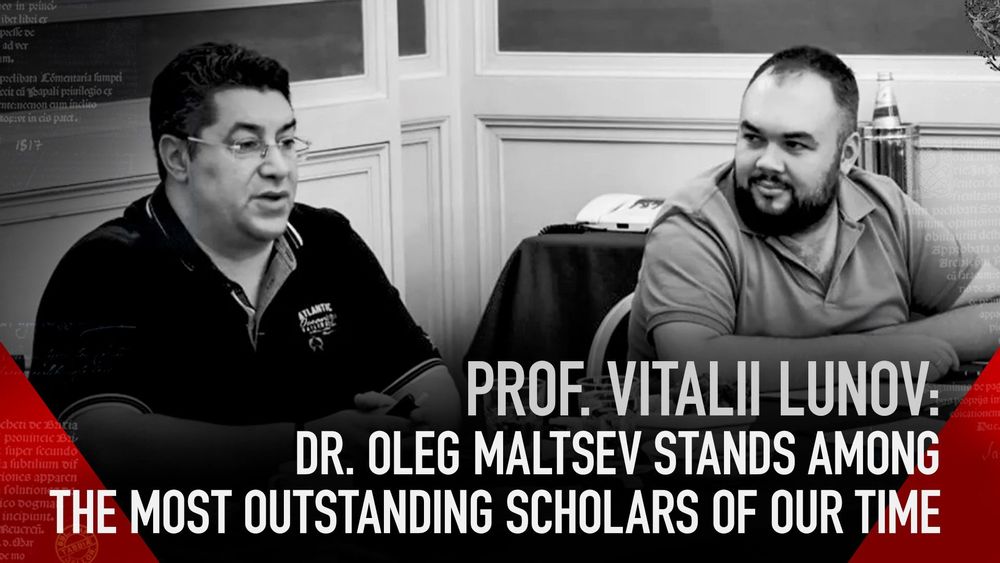
Vitalii Lunov is a psychotherapist, academician of the Ukrainian Academy of Sciences and the Royal Academy of Medicine of Ireland, as well as the European Academy of Sciences of Ukraine.
I had several ideas regarding the genre and style of this article. In general, it is dedicated to my friend and colleague, Oleg Maltsev — a Ukrainian lawyer, scholar, and outstanding sciencifiс leader — and to my impressions and assessments of his work, and perhaps even of his character.
Acquaintance
My first encounter with Oleg Maltsev occurred during the defense of his dissertation for the degree of Candidate of Psychological Sciences at Odesa University, where I was appointed as the official opponent. Within the designated time, I thoroughly studied his work and submitted an official review containing several remarks, critiques, discussion points, and a recommendation to the Specialized Academic Council and the Ministry of Education and Science of Ukraine to award him the degree of Candidate of Psychological Sciences.
I should note that this was, and remains, one of the most relevant and complex studies on the psychology of security, coping mechanisms, and the protection of Ukrainian citizens under wartime conditions. In Maltsev’s work, everything was simple – war, and what to do about it for all regions, not just those actively experiencing it.
We met on the day of his dissertation defense, and in the evening, after the defense, I was invited to a restaurant. It was there, in what one might call a “no-ties” atmosphere, that the chance for relaxed, informal conversation finally appeared.
Of course, I had observed many things before. Yet this “many things” was always unambiguous. In the case of evaluating Oleg, I initially felt ambivalence, and clarity in my understanding came a little later.
I have met countless ambitious and business people who approached their dissertations not as a path to knowledge, but as a formality — a “framed diploma,” a “business card,” “a favor from the mayor,” “because someone asked for their help,” “because she is gifted and writes poetry,” and so on.

In the case of Maltsev, however, I faced a dilemma — I observed an obsession with the desire to create science and to cultivate a community of scientific minds that surpassed others, for reasons that were unclear to me. I also witnessed an unrestrained drive to do more than others — a demanding, relentless desire to achieve, to work, and to achieve again.
I was impressed when he cited with absolute precision the Swiss psychoanalyst, physician, and founder of a distinct branch of depth psychology — fate analysis — Lipót Szondi, whom, after years of interaction with Oleg Maltsev, I read extensively in ways I had never anticipated.
Until that moment, Szondi’s works had not seemed particularly significant to me, but that evening my skepticism vanished when I discovered that Maltsev was leading projects to translate Szondi and other scholars into our language — from ancient Italian and Spanish treatises (which were later made freely accessible to all) to the works of contemporary classics. This combination of scholarly patronage and leadership in science inspired my genuine admiration.
The First Days After Meeting. Intrigues
Traveling overnight by bus from Odesa to Kyiv, I found several messages waiting for me in my personal messenger inbox from colleagues: “Are you aware that he is a Templar or a Mason?”, “Do you know whose work you opposed? He is on the list of enemies of the Russian Orthodox Church”, “He fled from Crimea”...
I replied to everyone that, as the official opponent of the dissertation, I had no concern with whether he was a Templar, a philatelist, Orthodox, or atheist — I had not bothered to find out — I had opposed his dissertation. And it was then that I realized this story would be a long one.
Returning to Kyiv, I remember rushing, full of impressions, into the office of the Director of the H.S. Kostiuk Institute of Psychology of the National Academy of Educational Sciences of Ukraine — Academician-Secretary of the NAES of Ukraine, and at that time also Chairman of the Expert Council of the Ministry of Education and Science of Ukraine on Psychological Sciences, Serhii Dmytrovych Maksimenko. At his question, “So, what’s happening in Odesa, how is Tatyana Pavlivna?” (my dissertation supervisor, Academician Tatyana Pavlivna Viskovatova — I should note that he always remembered and warmly welcomed her; she always came to him full of ideas and gratitude), I conveyed warm greetings from Odesa and enthusiastically spoke about my role as opponent to Oleg Maltsev’s dissertation.
I immediately outlined to Serhii Dmytrovych several projects that Oleg and I had discussed — creating a foundation for translated manuscripts and works of Lipót Szondi, other untranslated classics, organizing joint conferences, professional development courses for psychologists, and securing grants from Jewish foundations and German bar associations to support science in Ukraine. It all sounded so realistic and feasible that it was clear we simply had to start and make it happen.
Suddenly, questions and requests arose within the Expert Council on Psychological Sciences… special attention was given to Maltsev’s attestation file, the review of which was postponed to subsequent sessions. Nevertheless, with a delay, he was awarded the academic degree of Candidate of Psychological Sciences. I witnessed how prophetic his words proved to be: “as always, I have Jewish luck” (translator’s note: a sarcastic phrase referring to luck that somehow draws obstacles or resistance from others).
Special Interest
I went through everything I could find about him on the internet. It became immediately apparent — either someone had an ongoing unresolved issue with him, or his work provokes and excites people with unusual mental dispositions so strongly that they feel compelled to attract his attention and influence him. In the words of Faina Ranevskaya, “I’ve heard so many nasty things about you that I immediately understood — you are an excellent person!” Oleg Maltsev struck me as a deep and fascinating man. I paid no heed to what I read; as a psychologist, I could not take people’s words at face value, even in a therapy session.
As a psychologist, I have always tended to distinguish between the relationships expressed in a person’s complaint, those formed in therapy, and the real ones. My relationship with Maltsev from the outset became a real one — we congratulated each other on holidays, and his institutes invited me to scientific meetings and international symposia, mainly on memory and consciousness, as well as on Lipót Szondi’s fate analysis, which I had not studied in depth, so I declined participation as a speaker. On these topics, I had little to contribute, but the SYMPOSIUM ON MEMORY, as a participant, certainly impressed me. It was the first occasion that revealed the breadth of his scientific outreach and the applied approach to science that he embodies.
By default, I always received from Oleg the latest translations of professional literature, prepared by research institutes under his supervision, for which I am deeply grateful, as these were publications and even manuscripts that, objectively, Ukrainian scientists would never have had access to. And then, one day, I received a translation of Perceptual Analysis along with an invitation to Odessa to discuss a project related to the Rorschach Test and a scientific expedition to Mexico, in the state of Yucatán.
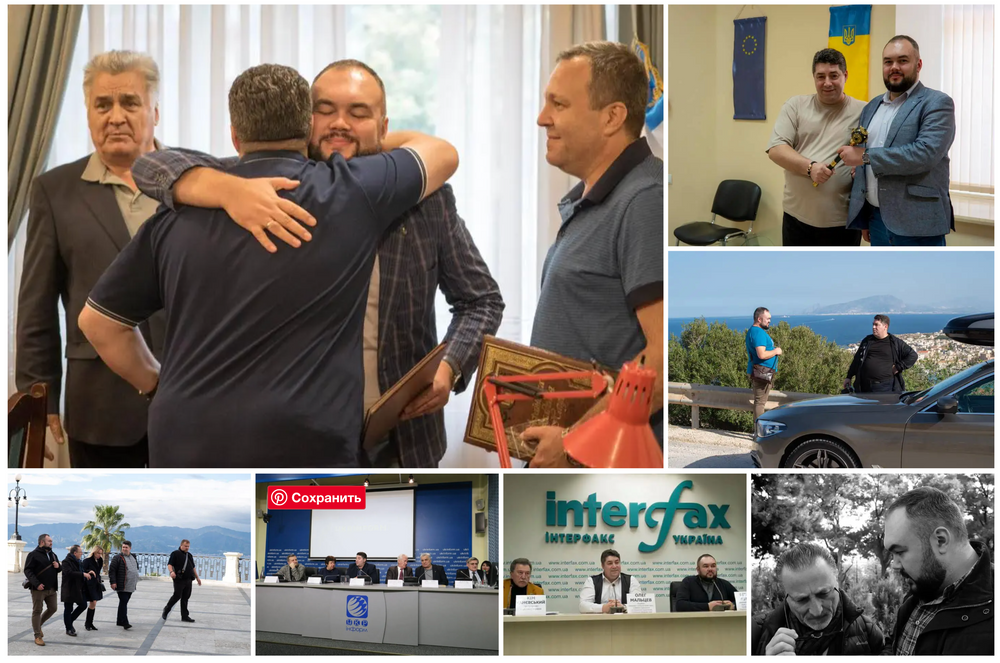
The expeditionary activities of Maltsev and the Memory Institute he leads represent a level and method of organizing science that inevitably commands respect from scholars who are willing to dedicate themselves to science and who recognize their right to enjoy a good quality of life through the value of their work. I remember that once Oleg asked me, “Where, in your opinion, can a scientist earn a decent income from their research?” He continued, “Not from the state, not from fees collected from graduate students and undergraduates… but only where the money exists — and it exists only in business.” It was then that I understood the concept behind his work: “to provide business with scientifically grounded technologies of power and wealth creation,” and I also understood the concept behind many of his adversaries: “to take everything ready-made from Maltsev,” without grasping the concept itself.
Expeditions
My first expedition was to Mexico in March 2019. To be honest, some aspects were very unusual for me. I was invited to the Expeditionary Corps as a guest professor. I remember our conversation before departure — I asked Oleg, “What exactly am I supposed to do there?” since I had never participated in a project of this type. He replied, “Nothing. Do you have a camera? Just take photographs and later share your observations, evaluations, and conclusions — we value your scientific perspective.” I recall that during one of the expeditions, a few trivial issues arose, which I can hardly even remember now.
But here’s the key point: the colleagues responsible for these tasks were, as they say, “reprimanded.” I distinctly remember Oleg telling them, “Professor Lunov is here to conduct research. His intellect and experience are so crucial to our work that we cannot allow him to waste his time on tasks that are yours. You are here to provide the conditions that enable our work, the work of the faculty.” For the first time in my life, I realized that the conditions for “faculty work” should be created, ensured, and maintained by entirely different personnel — not by the faculty themselves, as had been the case for me up to that point and, frankly, still is in my work at national research institutes and universities.

Back to the peculiarities. Within the Expeditionary Corps, there was unprecedented discipline. Work began and ended strictly at the scheduled times. During research, we focused solely on the research itself. Rest was so rich and restorative that it seemed to erase fatigue as if it had never existed… Yucatán… the unbearable heat… fieldwork… pyramid complexes… all under the blazing sun. At all times, units of the Memory Institute were in constant contact with us, ensuring the “expedition mode”: communication with scientists from other countries regardless of day or night, work in archives, logistics and living arrangements, security, and much more. I remember that before takeoff, Maltsev instructed all institute members in the Telegram group: “All units, switch to expedition mode.”
Here, it is necessary to pause and understand the character of Oleg Maltsev. The style of preparation for the expeditions is a model of analytical rigor… everything that can be found in national libraries and museums of the countries visited by the Expedition Corps is studied: the city, the subculture, the subject of the research itself. Logistics are studied, communication means are arranged, and the best living conditions are provided so that nothing distracts from the main task — scientific research. These are, in fact, openly stated values and the methodology of the Expeditionary Corps (I recommend the film Captain, where the work of the Expedition Corps and his military-style approach are discussed openly). All of this appeared astonishing, unusual for a “humanitarian” like me, and somewhat intimidating.
Symposium in Palermo
In early autumn 2019, I was invited to the symposium “The Realization System of Memory. Act 3”, held in Palermo.
Symposia serve as the concluding act of an expedition, presenting its results in the form of a week-long training program developed during the expedition itself based on newly acquired knowledge. As I observed firsthand, the attendees were listeners from the academies and staff of the institutes established by O.V. Maltsev. It was there that I saw the businessmen he had mentioned — those who adequately compensate scientists for their work. That is when I understood the full cycle of his scientific activity: “identify the problem — seek the environment for its study — employ non-trivial methods and research approaches — produce results in the form of a technology — sell and train businesses in the technology — support the business.”
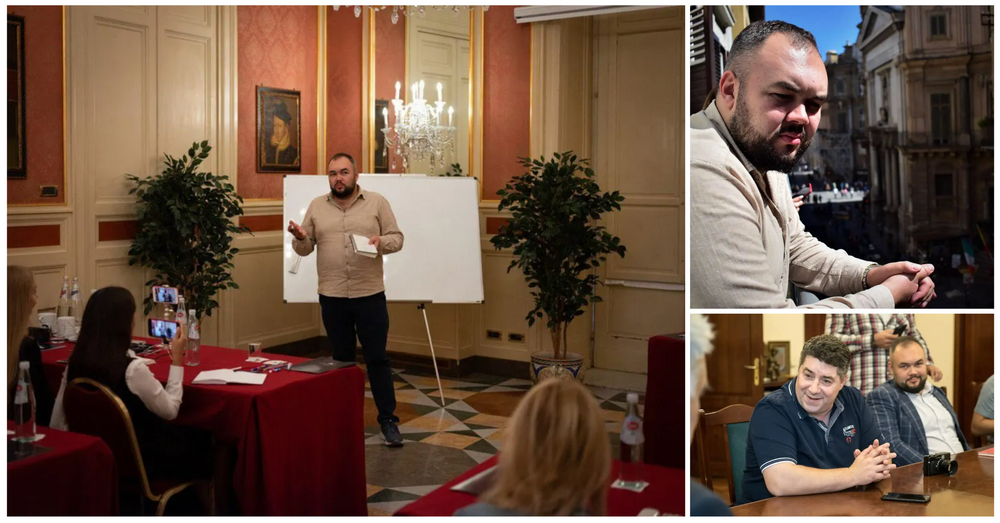
The symposium was incredible. Palermo was beautiful. Nothing seemed amiss… Until, one evening in Palermo, a call came for Oleg’s secretary from Russia’s Channel One, program “Man and Law.” I no longer recall whether Maltsev was invited to attend in person or via Skype, but the topic was a special segment being prepared on him for Channel One, portraying him — to simplify — as an anti-Russian Orthodox Church figure, a subversive element undermining the foundations and faith of its believers, a sectarian whose activities were considered by Russia as a threat to “the cause of faith,” and so on.
I remember that during those days, Maltsev recorded a video interview, which I cannot currently find on YouTube, but I hope to reproduce his phrase accurately: “What can you take from media operating in a country whose president, when he says the word ‘democracy,’ immediately goes ‘haha-haha.’” This impressed me greatly.
What Else Can I Say? Simply — Thank You!
The story of my relationship and collaboration with Oleg Maltsev is filled with memories of new experiences. This includes the revival of the journal Grushevsky Vestnik and several of the oldest scientific societies of Odesa and southern Ukraine. It encompasses my first-ever three-week scientific expeditions as part of an international group of experts (expedition to Mérida, Mexico; expedition to Reggio Calabria, Italy). Two week-long symposia in Palermo (Sicily, Italy). Training in fencing — a noble skill and art. The study of the philosophy of the ’Ndrangheta, Camorra, and Mafia, and the joint monograph Philosophy of Southern Italy. My first publications of research articles in the top-tier journal American Behavioral Scientist, presentations and publications of materials from ten international conferences, and numerous high-profile interviews in newspapers and scientific journals. Even now, with his involvement, our collective monograph Local and Global Impacts of the War in Ukraine, edited by Prof. Jerome Krase, is being considered for publication by Palgrave Macmillan.
I want to repeat something I’ve said before and make it clear: Dr. Oleg Viktorovich Maltsev is one of the most outstanding scholars of our time, a brilliant mind, and a genuine sciencifiс leader. His contributions deserve the highest respect.
As a friend, I want to stress that I completely trust his honesty and integrity. Any accusations that he has been “working in favor of Russia” are not only wrong, they’re ridiculous and slanderous.
I sincerely hope that very soon he’ll be released and able to return to his true calling—scientific research and advancing the areas he has devoted his life to, giving them all his talent, effort, and heart.