

In His Own Words: Prof. Maxim Lepskiy on Dr. Oleg Maltsev
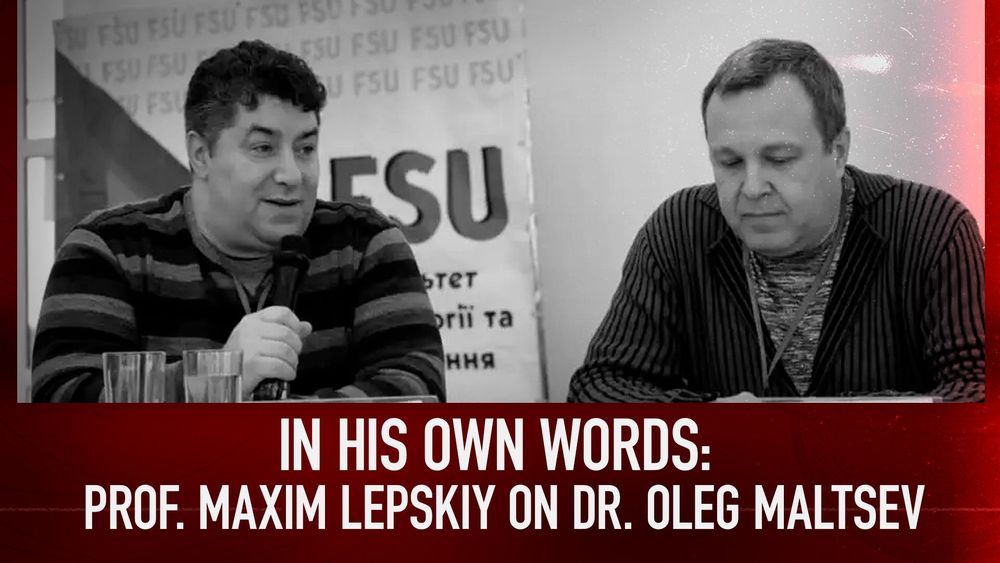
“Oleg Maltsev's Scientific Work Is Exactly What Ukraine Needs”
Prof. Maxim Lepskiy.
Science is never only the accumulation of knowledge; it is also the living dialogue between people who dedicate their lives to inquiry. Professor Maxim Lepskiy’s testimony about his colleague, Academician Dr. Oleg Maltsev, is written from this perspective.
In this first-person reflection, Professor Lepskiy speaks of lived experience: expeditions where science demanded endurance, debates where ideas were tested, communities built not on titles but on real work. He describes Maltsev as a rare academic leader — one who founds schools, unites scholars, restores institutions, and protects his students. And he recalls, with both admiration and pain, how such a man now faces injustice, detained without evidence at a moment when his country needs science most.
We present this article to the international academic community as more than recollection. It is a portrait of a scientist who is not “frozen,” but alive with inquiry, whose strength lies in example, whose authority is born of results. Above all, it is a reminder that behind every discovery stands a person whose integrity sustains the very possibility of science.
Science as the Foundation of Friendship
The essence and foundation of our friendship, and indeed our relationship, is science. That is how we first came to know each other.
Dr. Oleg Maltsev is a multifaceted individual — a scientist and a man of rare stature. Science became not only the subject but also the source of our union; it is the space where our thoughts, debates, and search for truth converge.
Initially, I was invited to conduct an independent expert review of the history of fencing for one of his monographs. It was a fascinating project. He had been deeply involved in the study of historical fencing. Thanks to his efforts, it became possible to translate unique ancient treatises that, I must admit, I had never imagined could be rendered into modern language. These texts revealed the structure and traditions of fencing schools, their evolution, and the influence they later exerted on our history.
It was an incredibly engaging experience. There was no mere agreement between us; quite the opposite — we argued, discussed, and debated. The result was serious scientific work.
Not long after, I arrived in Odessa, and we met in person. We held a truly remarkable roundtable discussion — brilliant speakers, rich subject matter, and many questions relating to philosophy, psychology, and applied management, all of which are essential to modern science and practice. The conversation flowed naturally, as there was much to explore. Dr. Maltsev consistently brought new findings, ideas, and discoveries to the table — of which he has many. It was an unforgettable experience for me. I remember giving him a copy of the Encyclopedia of Hand-to-Hand Combat as a gift. He appreciated it deeply and was genuinely pleased. It is not often that scientists exchange monographs at a first meeting. For me, this was a sign of true scientific camaraderie: we met as colleagues. And from that point on, a deep collaboration began, with science at the heart of our friendship.
The Most Valuable Aspect of Science Is Applied Field Research
Dr. Maltsev’s expeditions made a particularly strong impression on me. At the time, I already had considerable expedition experience, but those were mostly archaeological and tourist expeditions. On one occasion, I even founded my own survival school: together with my friends, who were then high school students, we traveled to the Carpathians and to Crimea — wherever we could reach with our backpacks.
I also had archaeological experience. Alongside our mentor, Gennady Nikolayevich Toshchev — an outstanding man whom we affectionately called “Boss” — we conducted excavations in some of the most sacred sites of our history, including those in the Zaporizhzhya region. That was the background I brought with me into the world of expeditions.
During one of our early conversations, Dr. Maltsev said something that immediately caught my attention: “I conduct expeditions on history — the European history of Ukraine, European history in general, and the European history of the Jews.” I was intrigued. Expeditions always mean fieldwork, and in science, applied work is the most valuable and stimulating endeavor.
Dr. Maltsev developed his own unique methodology for conducting field research. It particularly resonated with me, as I was already deeply engaged in visual sociology at the time. This became one of the topics we were especially eager to explore — and still find compelling today. Our collaboration in this area ultimately led to the publication of several joint monographs on visual sociology.
Visual Sociology in Action
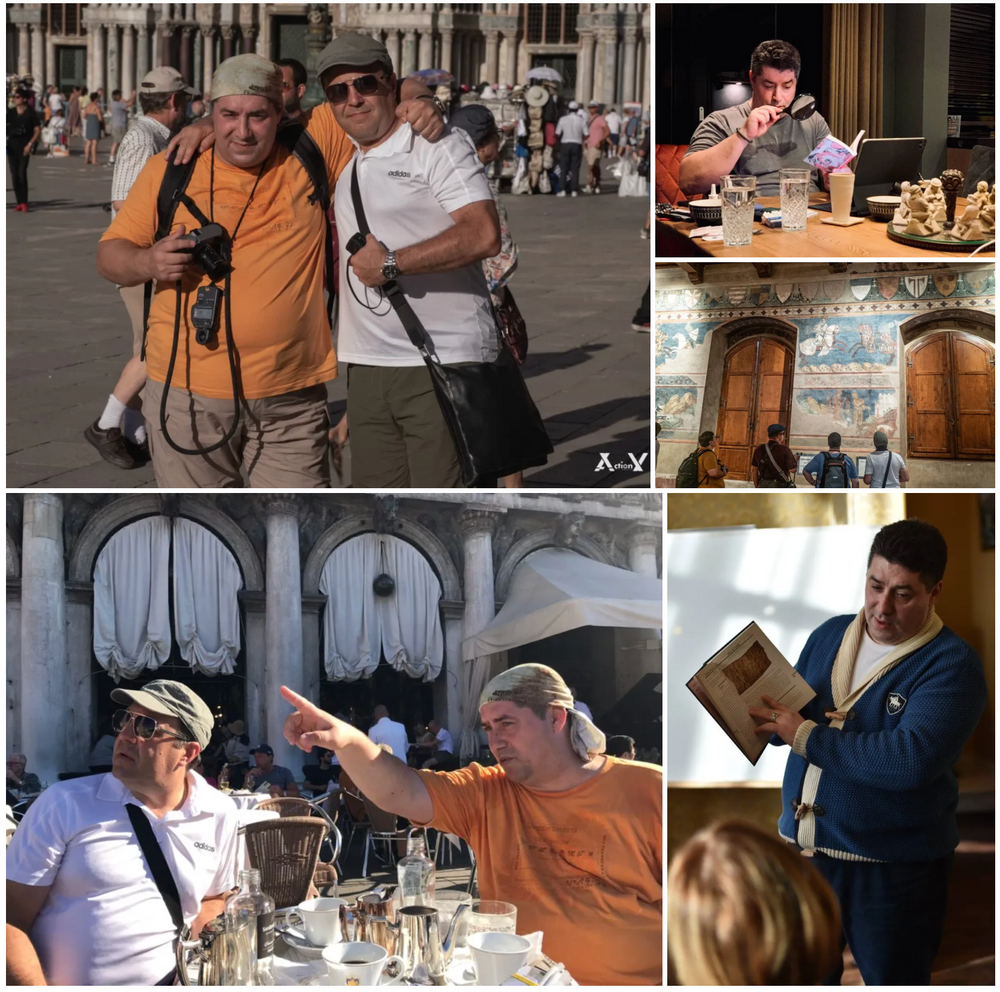
Everyone participating in the expedition worked with a camera, and I too was taught how to use it properly. Initially, I considered it a minor detail. But it turned out to be an entire methodology — one that opened new intellectual horizons. I had dabbled in photography before, but only on a superficial level. Here, I encountered real professionals with a distinct scientific approach. Architectural elements, symbolic markers, and cultural layers of the territory were captured from multiple angles. This generated a rich body of material that enabled a nuanced study of both the history and psychology of place.
The process proved to be incredibly fascinating. It wasn’t just about capturing photographs. It allowed me to collect data not only about the built environment or historical background, but also about the symbolic psychology embedded in specific territories. The results were remarkable: empirical data, living traces of history that could be studied long after the expedition concluded. These were “living facts” — not yet distorted by time or already transformed, but rather preserved in cultural layers. Prior to this experience, I had rarely given such matters serious thought. Expeditionary work turned out to be not just informative, but genuinely thrilling. It is an outstanding scientific technology.
Though I had studied and written about visual sociology, it was during these expeditions that the discipline came alive for me. This was a new level of experience. The photographs were no longer just illustrations — they became primary scientific sources. I have returned to the expedition photographs many times since, drawn back by the unresolved questions they continue to provoke.
Most importantly, this was collaborative work carried out under extremely intense conditions. Participants were expected to find scientific solutions within short timeframes and under significant pressure. Intensity, curiosity, and soulful engagement were essential — but mutual support was paramount. Without it, an expedition simply cannot succeed.
The results of this work were impressive: academic articles, journal publications, visual archives, photographs, documentary films, and monographs — or drafts for future ones. This is what true applied field research looks like: it produces tangible outcomes in remarkably short timeframes.
I highly recommend the documentary filmed during the Portuguese expedition, How the Captain Works, which is freely available on YouTube.
From Visual Sociology to Criminology
It is also noteworthy that Dr. Maltsev has an extensive body of research in the field of criminology. He drew me into this field, and I found it intellectually captivating to examine organized crime within a broader social context. As a sociologist, I have always placed high value on the ability to observe social relations, their dynamics, and their underlying patterns.
Moreover, we were able to bring prominent international experts into the project. These are world-class specialists with long-standing experience in the field. Their involvement added both depth and credibility to the research.
Among them:
- Antonio Nicaso — permanent consultant to governments and law enforcement agencies worldwide.
- Professor Harvey Wolf Kushner — Chair of the Department of Criminal Justice and Professor of Criminal Justice at LIU Post (Brookville, New York); an internationally recognized authority on terrorism.
- Emilio C. Viano — Professor, Ph.D., New York University; President of the International Society of Criminology and of the Bellagio Forum on Global Security and Social Development.
- Massimo Introvigne — Professor, sociologist of religion, and expert in intellectual property law.
He Has a Special Talent — He Is an Academic Leader
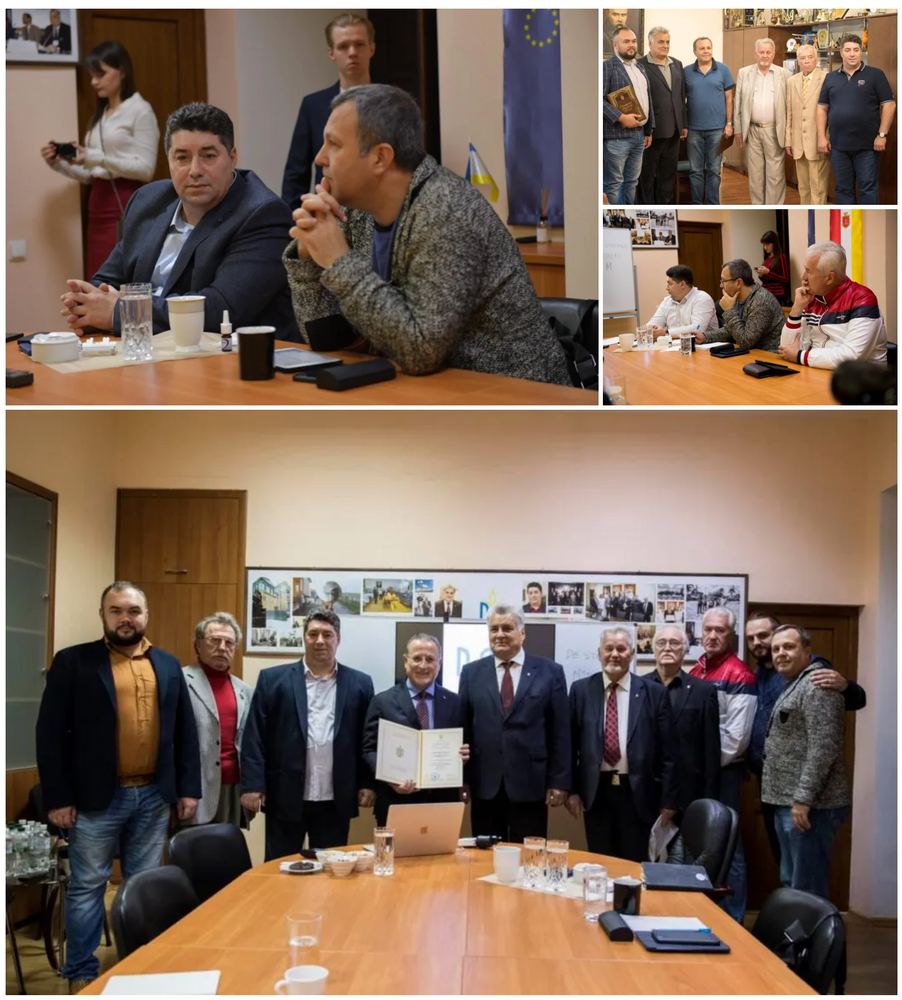
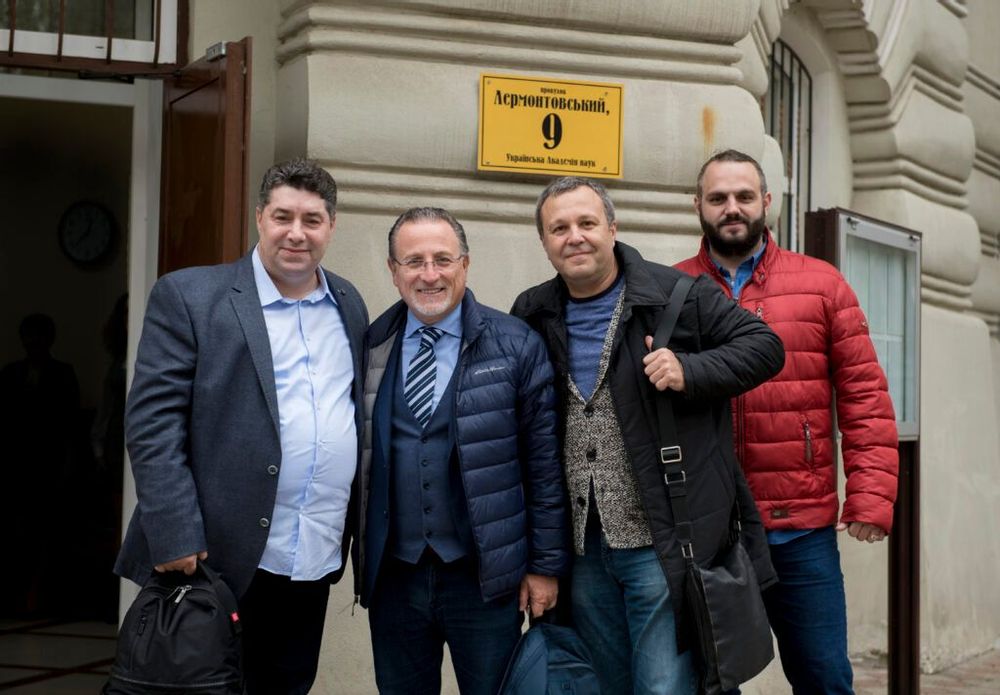
We continued working closely with these experts. When Antonio Nicaso visited the Ukrainian Academy of Sciences, it was a truly significant scientific event. Highly respected figures from Ukraine’s legal system gathered on that occasion: judges, practicing attorneys, and heads of departments in law and related disciplines. These encounters created living connections between science, professional experience, and dialogue across various schools of thought.
I want to emphasize that Dr. Maltsev is an exceptional academic leader — a role both unique and rare. Academician Maltsev belongs to this distinguished category. He not only produces knowledge but also builds entire scientific communities. This is a rare and remarkable talent.
There are few true academic leaders, yet their presence is essential. I know only a handful of such individuals: among them, Alexey Fedorovich Onipko, President of the Ukrainian Academy of Sciences; and Jerome Krase, President of the European Academy of Sciences of Ukraine — a world-renowned figure in the field of visual sociology and a representative of the American academic tradition.
This is the level Ukrainian science had attained — and it was in this context that Dr. Maltsev and my colleagues in Odessa became involved. We were part of this endeavor and continue it, despite the many challenges we face today.
Injustice and Shock
When all the legal and judicial proceedings against Dr. Maltsev began, it was a profound shock to me — and remains incomprehensible to this day. I still cannot believe that such a thing is possible in relation to a scientist. On the contrary, especially now, during wartime, science should be supported and used as a strategic resource in resisting the aggressor. Instead, we are witnessing a situation where criminologists are being targeted by the very subject of their study — crime.
The many forms crime can take is a vast and separate topic. But in such cases, we need facts. We need qualified professionals who know how to conduct investigations — lawyers, forensic experts, investigators. And they are indeed doing that work. But the process must be just.
What do we see instead? Is it acceptable that a scientist, held without evidence, on a fabricated case, remains in pretrial detention for nearly twelve months? This is absolutely unacceptable. It is not merely an injustice — it is an attack on science itself and a blow to society.
That is why I remain deeply disturbed by what has happened to him. A scientist who founds schools, writes books and scholarly articles, conducts expeditions, and contributes actively to intellectual life — is being held in a detention center. With no evidence. With no substantive charges. To me, this is utterly incomprehensible.
I know him from another side — as a scientist, as an academic leader, as a person, and as a friend. I have no questions about his professional work or his personal integrity. On the contrary, in times of war, such individuals are needed more than ever. Science must be fortified as a pillar of national resilience. Instead, we are witnessing repression against those who have dedicated their lives to scholarly inquiry.
Moreover, when the war began, Dr. Maltsev returned to Ukraine. At the time, he was on a scientific expedition, but realizing that his colleagues and students had remained in the country and needed his support, he chose to come back. It was during this period that a remarkable conference took place — Unknown Wars — where Dr. Maltsev once again proved himself to be an outstanding academic leader. It was precisely at that time that American and European scholars began to turn their attention to Ukraine from a scientific standpoint, discovering its unique historical and cultural legacy.
“Frozen Scientists”
I have worked extensively with Dr. Maltsev’s students and colleagues from various scientific institutes, all of whom hold him in high esteem. This respect is neither superficial nor contrived; it is sincere, grounded in observable facts and tangible results. I have witnessed this on numerous occasions. His authority is real — earned through years of dedicated work and meaningful scientific contributions.
Ultimately, it all comes down to results. Authority in science is not derived from words, but from sustained efforts and relationships built over time.
Let me offer an example from my own experience. My teacher was Vitaly Ivanovich Volovik — Doctor of Science, Honored Worker of Science and Technology, and Founder of the Zaporizhzhia School of Social Philosophy and Philosophy of History. A man I have always deeply respected and admired.
He once recounted a story about a meeting with Ivan Fedorovich Kuras, after whom the Institute of Ethno-National and Political Studies in Ukraine is named. Kuras had established an entire school of political science, and his students went on to become leaders in the field. During their conversation, Kuras said something striking: “There are a lot of frozen scientists.”
Vitaly Ivanovich asked, “What do you mean by frozen?” And Kuras replied, “Well, they defended their theses, published a few articles, and stopped there. They make no discoveries, build no schools, and are content merely with their titles.”
That is the tragedy. “Frozen scientists” receive a title and remain static. But science demands movement, risk, and true exploration. Such individuals did not last long in Vitaly Ivanovich’s school — they moved on, outside the tradition.
The same cannot be said of Dr. Maltsev. He is anything but “frozen.” He is a dynamic, active scholar, extraordinarily productive. His principle is straightforward: if you undertake a topic, you must develop it, delve into it, and see it through to the end. If you are unwilling, you are free to leave — no one will stop you. But if you choose to stay, you must work seriously. This is how he trains young researchers.
It is thanks to this uncompromising approach that a genuine scientific community has grown around him. His authority stems not from formal titles, but from real work and visible results — evident to colleagues and students alike.
This is why he is respected: for his active engagement, his drive, and the outcomes he produces. His standing is not based on regalia, but on meaningful contributions. This is the essential difference between a “frozen” scientist and a true one. He leads by example — and through this, he teaches.
Dr. Oleg Maltsev’s Strength
I believe that Dr. Maltsev’s strength lies first and foremost in his personal example. He is so extraordinarily productive that I often wonder: when does he sleep or rest? It feels as though his days last not twenty-four, but forty-eight hours.
I recall a comment made by one of my colleagues — I believe it was Pologin — who said that tacit knowledge holds tremendous importance in science. This is not knowledge one finds in books. It is transmitted through the conduct of a teacher — through their actions in both scientific inquiry and everyday life. It manifests in their energy, in their character, in the way they approach and resolve problems.
This kind of tacit knowledge is, in fact, the most valuable. It cannot be obtained online or read in a text. It arises only through live interaction, through collaborative work, through direct contact. I believe this is one of the key reasons for Dr. Maltsev’s authority and influence.
Conversations That Spark Discovery
Let me share a story that illustrates something about Dr. Maltsev’s character. Before one of our expeditions, we found ourselves at the airport — coffee, cookies, and idle time to fill. We ended up talking for nearly an hour and a half, without pause. It was a rich exchange of questions and answers, expanding ideas and probing details. Dr. Maltsev possesses encyclopedic knowledge, and I also bring considerable experience, so it was stimulating to challenge each other’s views, to compare, and to align our perspectives. When our views coincided, it was especially rewarding.
Now imagine a “frozen” scientist. I remember a remark I once heard at the anniversary celebration of a well-known speech therapist at the National Pedagogical Drahomanov University. He spoke of certain individuals and described them with the expression pykhato radisni — that is, they appear to be scientists, but their knowledge is steeped in self-importance. They have no interest in verifying facts, engaging in discussion, or returning to primary sources. They lack the intellectual curiosity without which true science cannot exist. For them, science is more performance than pursuit.
With Dr. Maltsev, everything is the opposite. He is animated by an insatiable thirst for knowledge and a commitment to objectivity. He is never afraid to say, “I don’t know that. I need to think about it. I need to study it.” This reveals his honesty and authenticity — qualities that draw people to him.
Loyalty and Leadership
Dr. Maltsev possesses another important quality: he always protects his students. He may firmly correct their mistakes, even scold them at times, but he will never allow outside forces to attack or discredit them. This reflects his profound sense of duty and responsibility — to people, to science, and to results. He may be demanding, but to the outside world, he stands like a stone wall for those under his mentorship.
It is also important to emphasize that Dr. Maltsev is a man of great inner strength. He takes on an enormous workload — and he delivers. Thanks to his efforts, much has been restored. The Odessa Photographic Society, for instance, has resumed its activities, along with several other organizational structures. These are not merely “initiatives” — they function, they produce, and they yield tangible results. This is a staggering volume of work, the kind few are capable of managing. Such individuals are rare, and sadly, their numbers diminish with time.
I recall a conversation during a particularly difficult moment, when someone said to me: “Maxim Anatolyevich, you are strong, and they are weak. What do you expect from the weak?” I replied, “I would like the weak to become strong.” And in this, Dr. Maltsev and I are in full agreement. He himself is strong — and he is committed to seeing those around him grow, develop, and forge their own paths to success.
Of course, people differ: some are strong, some are not, and others reveal their strength only under specific conditions. But it is in moments of crisis that character is most clearly revealed. And we are all witnessing this now.
A Scientist Must Be Free to Work
To be honest, it pains me to see remarkable individuals prevented from doing their work in peace. I want Dr. Maltsev to return to his rightful place in scientific life — writing monographs, leading expeditions, organizing conferences. This is what Ukraine truly needs.
I admire the lawyers fighting on his behalf. But I hope the ordeal will soon come to an end, so that he can return to what he does best: founding schools, uniting people, advancing science, and making discoveries. He is, above all else, a man of science.
The translation of the article published in Granite of Science